
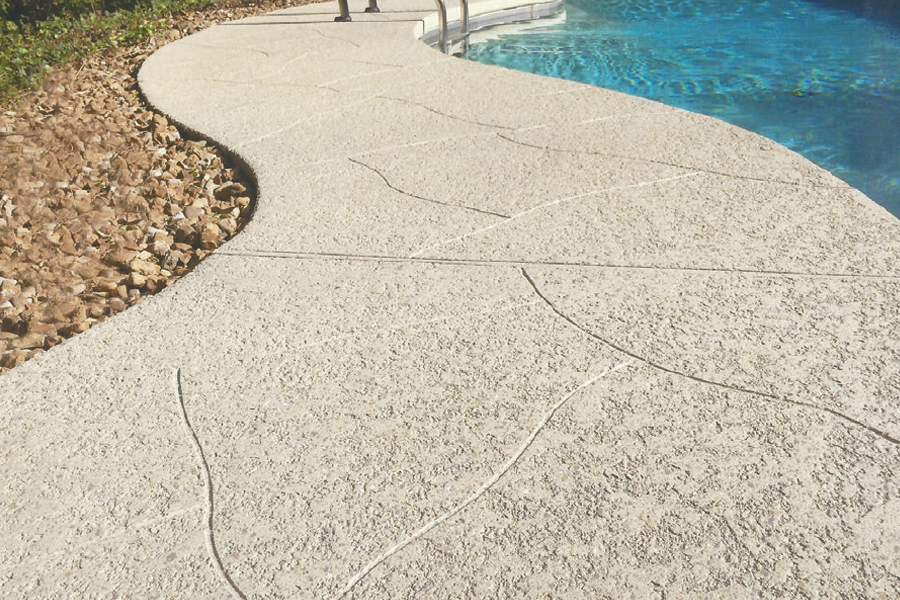
Classic Texture™ Decking
Cooler Than Normal Gray Concrete?
What makes the temperature of a deck, sidewalk, roof, or other structure hotter or cooler is the amount of energy from the sun it absorbs versus what it reflects. Reflected energy has very little impact on the heat of the surface. Energy is stored through the day and released through the night.
The two major factors
affecting energy absorption versus reflection are: material characteristics of the overlay and topcoat, and their colors.
Gray concrete or dark stone absorbs a lot of energy and stores it very well. Acrylic (plastic) does not absorb or store well. And make the concrete and acrylic (plastic) topcoat a light color and it reflects even more energy.
As days get long and temperatures stay elevated, less energy is released. The result is the favorable impact of reflected energy is reduced making your deck surface hotter.
Solar Reflective Index
Our overlays are white polymerized concrete and are inherently more reflective than typical gray concrete or exposed aggregate by storing less energy. Put two coats of our Finish Coat (acrylic – plastic) on it and reflects even more, further improving the cooling effect.
The amount of that reflection can be quantified by it’s Solar Reflective Index (SRI Value).
Foot to less surface area
What makes the deck “feel” hotter or cooler is not only the stored energy discussed above, but the amount of that energy transferred when your foot hits the deck. That heat transfer is dependent on the total surface area of contact. By design, the textured surface of Classic Texture Decking exposes the foot to less surface area than a standard concrete sidewalk, deck, or slab.
Our Classic Texture
System provides a system that is generally cooler than standard gray cement or exposed aggregate alternatives.